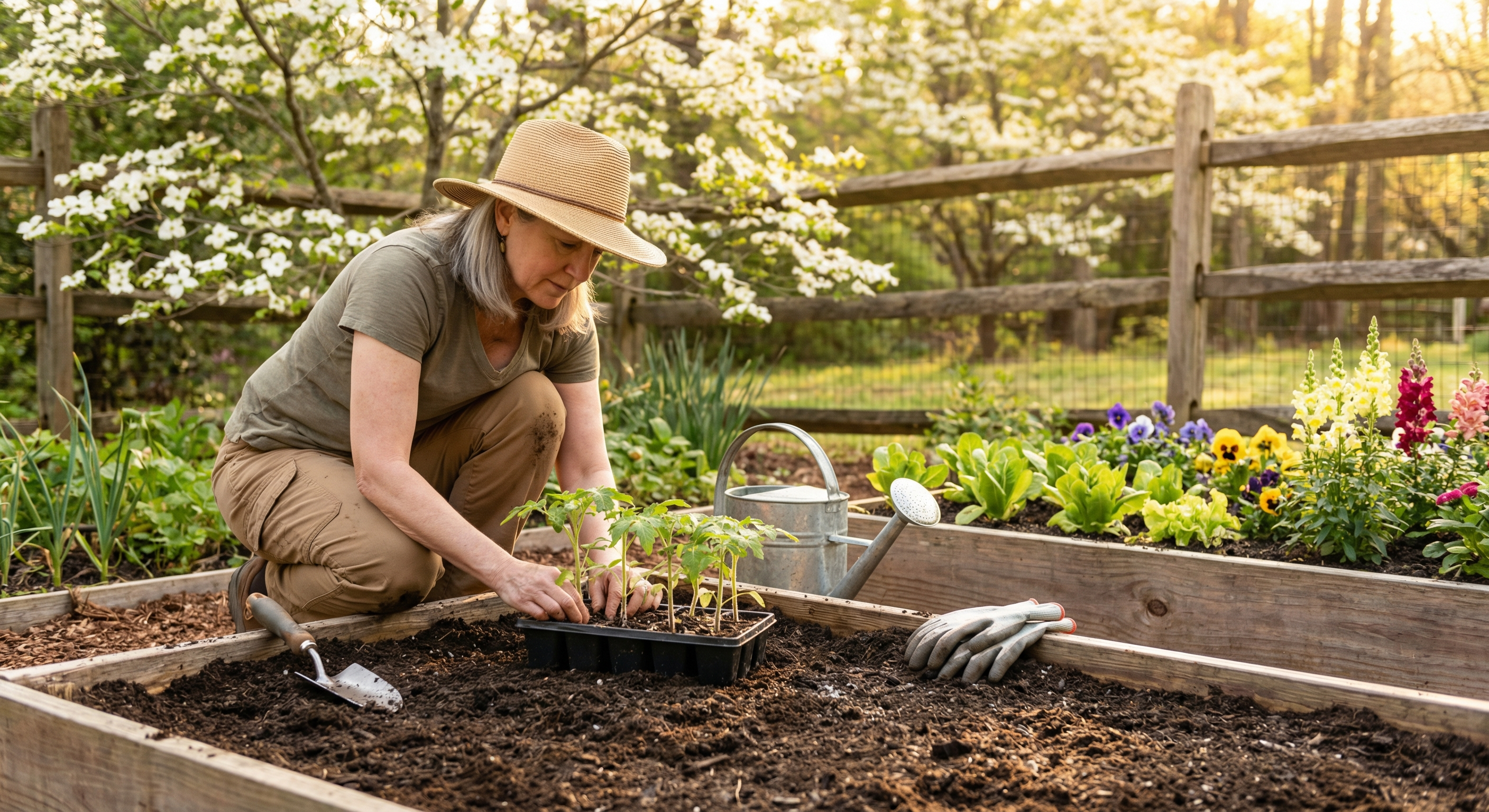
Spring in Greensboro, North Carolina is an exciting time for gardeners and landscapers. After the dormancy of winter, our Zone 7b gardens come alive with new growth, blooming flowers, and endless possibilities. But spring is also a critical time for maintenance tasks that set up your landscape for success throughout the year.
This comprehensive guide covers all the essential spring landscaping tasks for North Carolina gardens, organized by month to help you stay on track.
March: Early Spring Preparation
March marks the transition from winter to spring in Greensboro. While temperatures are still cool and unpredictable, there’s plenty of preparatory work to tackle.
Clean Up Winter Debris
- Rake leaves and debris from beds and lawn
- Remove dead branches and winter-damaged plant material
- Clear gutters and drainage areas
- Dispose of diseased plant material (don’t compost)
- Pull back mulch from crowns of perennials
Prune Early
- Summer-blooming shrubs: Prune crape myrtles, roses, buddleia
- Deciduous trees: Remove dead, diseased, or crossing branches
- DON’T prune spring-bloomers (azaleas, forsythia, dogwood) – wait until after flowering
- Shape evergreen shrubs if needed
Soil Preparation
- Test soil pH and nutrients (through Guilford County Extension)
- Amend beds with compost (2-3 inches)
- Avoid working clay soil when wet
- Begin preparing vegetable garden beds
Early Planting
- Plant cool-season vegetables: lettuce, spinach, peas, potatoes
- Direct sow hardy annual seeds: larkspur, poppies
- Plant bare-root roses and fruit trees while still dormant
- Divide summer and fall-blooming perennials
Lawn Care
- Apply pre-emergent weed control (early March before forsythia blooms)
- Rake to remove dead grass and thatch
- Overseed thin areas if needed
- Wait to fertilize until April
April: Prime Planting Season
April is Greensboro’s best month for planting nearly everything. The soil is warming, frost risk is decreasing, and plants establish quickly.
Major Planting Window
- Trees and shrubs: Plant container and balled-and-burlapped stock
- Perennials: Nearly all varieties can go in now
- Roses: Plant container roses
- Groundcovers: Establish before summer heat
- Wait until mid-to-late April for tender annuals and vegetables
Mulching
- Apply fresh mulch to all beds (2-3 inch depth)
- Keep mulch away from plant stems and tree trunks
- Use hardwood mulch or pine straw
- Replenish areas where mulch has decomposed
Fertilizing
- Fertilize lawns with slow-release product
- Feed established trees and shrubs
- Apply organic fertilizer to perennial beds
- Feed azaleas and camellias with acid fertilizer
- Begin feeding container plants
Pest and Weed Management
- Monitor for early pests (aphids, scale)
- Hand-pull weeds while small
- Apply mulch to suppress weed germination
- Scout for disease issues as weather warms
Garden Maintenance
- Edge beds for clean, defined lines
- Install or repair irrigation systems
- Stake tall perennials before they flop
- Deadhead spring bulbs as flowers fade (leave foliage)
May: Transition to Summer
May brings warmer temperatures and the last chance for spring planting before summer heat sets in. It’s also time to shift focus to summer maintenance.
Final Spring Planting
- Plant warm-season annuals: petunias, zinnias, marigolds, impatiens
- Plant warm-season vegetables: tomatoes, peppers, squash, beans
- Add tropicals to containers and beds: coleus, caladiums
- Finish any tree and shrub planting by mid-May
Watering Begins
- Water new plantings 2-3 times per week deeply
- Check soil moisture before watering established plants
- Water in early morning to reduce disease
- Apply 1 inch of water per week (including rainfall)
- Use soaker hoses or drip irrigation for efficiency
Deadheading and Pruning
- Deadhead spring bulbs (cut off seed pods, leave foliage)
- Prune spring-flowering shrubs immediately after bloom
- Pinch back annuals to encourage bushiness
- Cut back early perennials as they finish blooming
Lawn Care
- Mow regularly, removing no more than 1/3 of grass height
- Raise mower height as temperatures warm
- Apply second round of fertilizer if needed
- Control broadleaf weeds with selective herbicide
Prepare for Summer
- Install shade cloth over sensitive plants if needed
- Refresh mulch in areas that look sparse
- Clean and organize garden tools
- Set up rain barrels to conserve water
Spring Planting Guide by Type
Best Trees to Plant in Spring
- Flowering dogwood
- Eastern redbud
- Crape myrtle
- Red maple
- Serviceberry
- Japanese maple
Best Shrubs to Plant in Spring
- Azaleas
- Hydrangeas (all types)
- Boxwood
- Holly
- Spirea
- Nandina
Best Perennials to Plant in Spring
- Hostas
- Daylilies
- Coneflowers
- Black-eyed Susans
- Salvia
- Sedum
- Ornamental grasses
Best Annuals for Spring Planting
Cool-season (March-April):
- Pansies
- Snapdragons
- Dianthus
- Alyssum
Warm-season (May):
- Petunias
- Zinnias
- Marigolds
- Lantana
- Begonias
- Impatiens
Spring Lawn Care Calendar
Early March:
- Apply pre-emergent crabgrass control
- Rake to remove thatch and debris
- Overseed thin areas
April:
- First fertilizer application (slow-release)
- Begin regular mowing schedule
- Spot-treat weeds as they emerge
- Aerate if soil is compacted
May:
- Mow weekly or as needed
- Water 1 inch per week if rainfall is lacking
- Raise mower height to 3 inches
- Monitor for pests (grubs, chinch bugs)
Spring Gardening Mistakes to Avoid
Don’t Rush Tender Plants
Wait until after the average last frost (mid-April) to plant tender annuals and vegetables. A late cold snap can kill tomatoes, basil, and other warm-season plants.
Don’t Over-Fertilize
Too much fertilizer can burn plants and create excessive growth that attracts pests. Follow label directions carefully.
Don’t Work Wet Clay Soil
Working Greensboro’s clay soil when wet causes severe compaction. Wait until soil crumbles easily in your hand.
Don’t Pile Mulch Against Stems
Keep mulch 2-3 inches away from plant stems and tree trunks to prevent rot and pest issues.
Don’t Prune Spring-Flowering Shrubs
Azaleas, forsythia, lilac, and other spring bloomers should only be pruned immediately after flowering. Pruning in early spring removes flower buds.
Don’t Neglect Watering
New plantings need consistent water to establish. Even with spring rain, check soil moisture and water deeply 2-3 times per week.
Essential Spring Landscaping Tools
- Pruning shears – Sharp bypass pruners for clean cuts
- Garden rake – For clearing debris and leveling soil
- Spade and shovel – For planting and edging
- Garden hose with spray nozzle – For efficient watering
- Wheelbarrow – For moving mulch, soil, and debris
- Hoe – For weeding and cultivating
- Garden gloves – Protect hands from thorns and blisters
- Soil knife – Versatile tool for planting and weeding
Creating a Spring Maintenance Schedule
Weekly Tasks:
- Mow lawn
- Water new plantings
- Deadhead flowers
- Monitor for pests and diseases
- Pull weeds while small
Monthly Tasks:
- Edge beds and walkways
- Fertilize containers and annuals
- Prune as needed (after flowering)
- Refresh mulch in sparse areas
- Clean and sharpen tools
Once Per Season:
- Test soil and amend
- Apply pre-emergent weed control
- Deep clean hardscaping
- Service mower and other equipment
Conclusion
Spring is the most important season for North Carolina landscaping. The work you do in March, April, and May sets the foundation for a beautiful, healthy garden throughout the year. By following this schedule and staying on top of essential tasks, you’ll create a landscape that thrives in Greensboro’s Zone 7b climate.
Remember the key spring priorities:
- ✅ Clean up thoroughly in early spring
- ✅ Plant at the right time for each species
- ✅ Mulch generously to conserve moisture and suppress weeds
- ✅ Water new plantings consistently
- ✅ Fertilize appropriately without overdoing it
- ✅ Stay ahead of weeds while they’re small
With proper spring care, your Greensboro landscape will reward you with beauty, color, and healthy growth all season long. Happy gardening!