Greensboro, North Carolina offers unique opportunities and challenges for landscaping enthusiasts. Situated in USDA Hardiness Zones 7a and 7b, the city experiences hot, humid summers and mild winters—perfect for a diverse range of plants and landscape designs.
Whether you’re a homeowner looking to transform your yard, a new resident trying to understand local growing conditions, or simply someone passionate about creating beautiful outdoor spaces, this comprehensive guide will help you navigate landscaping in Greensboro.
From understanding our local climate and soil conditions to choosing the right plants and maintaining your landscape year-round, we’ll cover everything you need to know to create and maintain a thriving landscape in the Triad area.
Understanding Greensboro’s Climate and Growing Conditions
USDA Hardiness Zones
Greensboro sits primarily in USDA Hardiness Zone 7b, with some areas falling into Zone 7a. This means:
- Average minimum winter temperature: 5°F to 10°F (Zone 7b)
- Growing season: Approximately 210 days
- Last spring frost: Mid-April (average)
- First fall frost: Late October to early November (average)
These zones determine which plants will survive our winters and thrive in our climate. When selecting plants, always check that they’re hardy to at least Zone 7b.
Seasonal Weather Patterns
Spring (March-May)
- Unpredictable temperature swings
- Increasing rainfall
- Prime planting season for most species
- Average temperatures: 50°F-75°F
Summer (June-August)
- Hot and humid conditions
- Occasional drought periods
- Afternoon thunderstorms common
- Average temperatures: 75°F-90°F
- High humidity can stress some plants
Fall (September-November)
- Cooler temperatures, lower humidity
- Excellent planting season
- Beautiful foliage colors
- Average temperatures: 55°F-75°F
Winter (December-February)
- Mild compared to northern states
- Occasional snow and ice storms
- Some evergreens and winter interest plants thrive
- Average temperatures: 35°F-50°F
Soil Conditions
Greensboro’s soil is predominantly red clay, which presents both challenges and opportunities:
Challenges:
- Poor drainage when compacted
- High pH (alkaline to neutral)
- Hard to dig when dry
- Heavy and sticky when wet
Solutions:
- Amend with organic matter (compost, aged manure)
- Create raised beds for better drainage
- Add sulfur to lower pH if needed
- Mulch heavily to improve soil structure over time
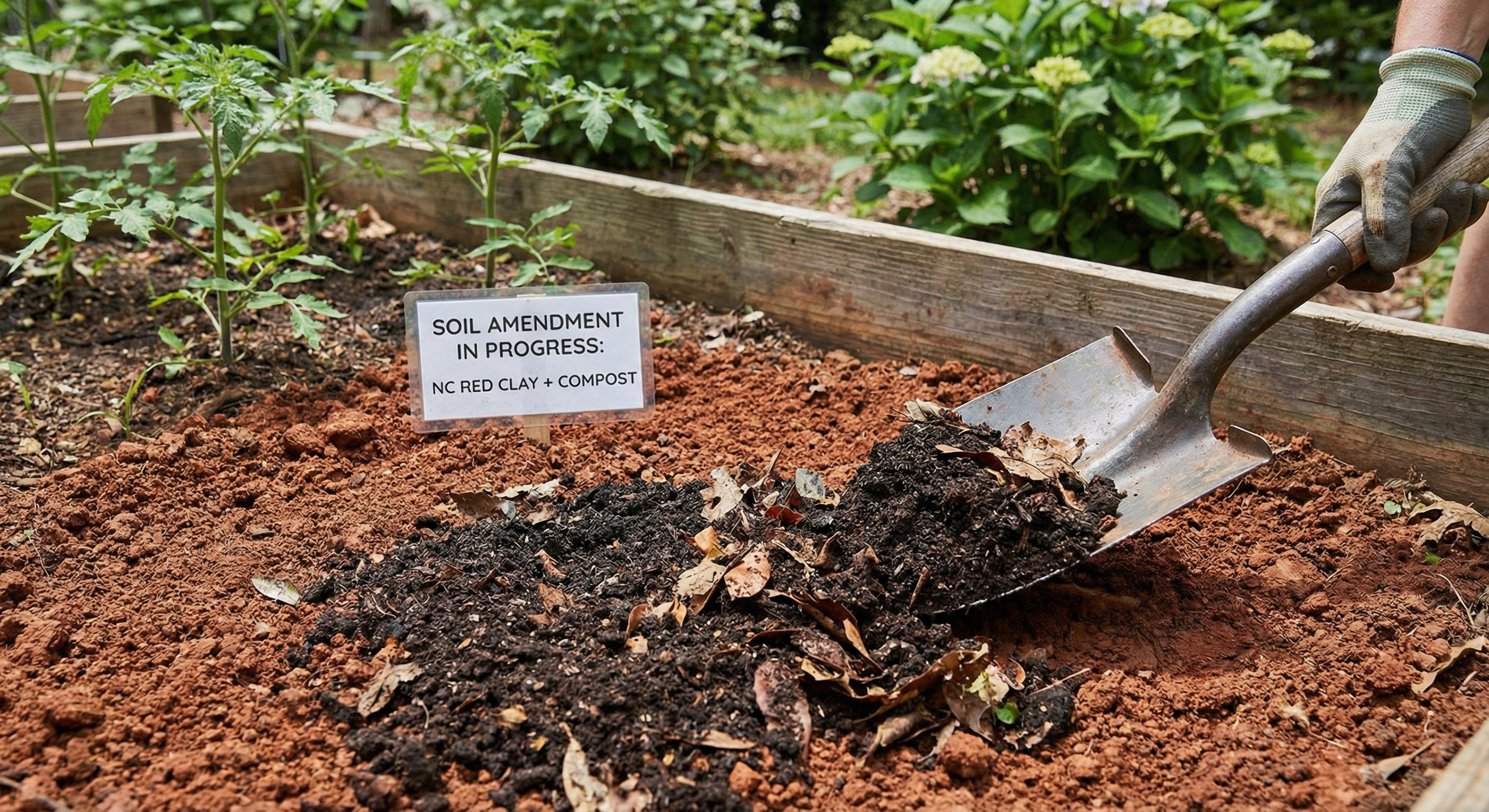
Advantages:
- Rich in nutrients when properly amended
- Excellent water retention during dry periods
- Can be transformed into productive soil with effort
Best Plants for Greensboro Landscapes
Native Plants (Low Maintenance, Eco-Friendly)
Native plants are adapted to our climate and require less water, fertilizer, and maintenance once established:
Trees:
- Eastern Redbud (Cercis canadensis) – Beautiful spring blooms
- Flowering Dogwood (Cornus florida) – State flower of NC
- Red Maple (Acer rubrum) – Stunning fall color
- Southern Magnolia (Magnolia grandiflora) – Evergreen with large white flowers
Shrubs:
- Oakleaf Hydrangea (Hydrangea quercifolia) – Shade tolerant
- American Beautyberry (Callicarpa americana) – Purple berries in fall
- Sweetshrub (Calycanthus floridus) – Fragrant flowers
- Inkberry Holly (Ilex glabra) – Evergreen, versatile
Perennials:
- Black-eyed Susan (Rudbeckia hirta) – Bright summer color
- Purple Coneflower (Echinacea purpurea) – Pollinator magnet
- Bee Balm (Monarda didyma) – Attracts hummingbirds
- Wild Columbine (Aquilegia canadensis) – Spring bloomer
Drought-Resistant Plants
Given our occasional summer dry spells, these plants thrive with minimal water:
- Lantana – Heat and drought tolerant annual
- Sedum (Stonecrop) – Succulent groundcover
- Russian Sage – Silvery foliage, purple flowers
- Ornamental Grasses – Muhly grass, fountain grass
- Lavender – Fragrant, Mediterranean herb
Shade Plants
Perfect for areas under trees or on north-facing sides:
- Hostas – Wide variety of sizes and colors
- Ferns – Native to NC forests
- Heuchera (Coral Bells) – Colorful foliage
- Astilbe – Feathery plumes in summer
- Hellebores – Winter blooming perennials
Landscape Design Principles for Greensboro
Planning Your Landscape
1. Assess Your Space
- Sun exposure (full sun, partial shade, full shade)
- Soil drainage (test with water)
- Existing features (trees, structures, slopes)
- Views to enhance or screen
2. Define Your Goals
- Low maintenance vs. high-impact
- Wildlife habitat vs. formal design
- Entertaining spaces vs. privacy
- Edible landscaping vs. ornamental
3. Consider Microclimates
- South-facing walls = hotter, drier
- North-facing areas = cooler, more shade
- Wind exposure on corners and open areas
- Heat sinks near pavement and driveways
Design Styles That Work in Greensboro
Southern Traditional
- Boxwoods, azaleas, hydrangeas
- Formal hedges and symmetry
- Front porch plantings
- Classic perennials and roses
Native/Cottage Garden
- Informal, naturalistic plantings
- Native perennials and grasses
- Pollinator-friendly
- Lower maintenance
Modern/Contemporary
- Clean lines, architectural plants
- Ornamental grasses, evergreens
- Hardscaping features
- Minimalist plant palette
Edible Landscape
- Vegetable beds integrated with ornamentals
- Fruit trees and berry shrubs
- Herb gardens
- Productive and beautiful
Seasonal Landscaping Calendar for Greensboro
Spring (March-May)
March:
- Prune summer-blooming shrubs
- Apply pre-emergent weed control
- Start cool-season vegetables
- Divide perennials
April:
- Prime planting time for most species
- Mulch beds (2-3 inches)
- Fertilize lawns and established plants
- Monitor for pests
May:
- Plant warm-season annuals
- Deadhead spring bulbs
- Water deeply during dry spells
- Edge beds and refresh mulch
Summer (June-August)
June:
- Deep water 1-2 times per week
- Deadhead flowers for continued blooms
- Monitor for Japanese beetles
- Harvest vegetables regularly
July:
- Maintain consistent watering
- Apply mulch to conserve moisture
- Prune spring-flowering shrubs after bloom
- Watch for fungal diseases in humidity
August:
- Plan fall planting projects
- Order spring bulbs
- Start fall vegetable seeds
- Continue deadheading and watering
Fall (September-November)
September:
- Best planting month for trees and shrubs
- Overseed thin lawn areas
- Plant fall vegetables and cool-season annuals
- Divide spring and summer perennials
October:
- Continue planting (soil still warm)
- Rake and compost leaves
- Plant spring bulbs
- Reduce watering as temperatures cool
November:
- Final lawn mowing
- Protect tender plants if early frost threatens
- Clean and store garden tools
- Plant bare-root trees and shrubs
Winter (December-February)
December:
- Minimal outdoor work required
- Water evergreens during dry spells
- Plan next year’s garden
- Order seed catalogs
January:
- Prune dormant trees (not oaks)
- Check mulch depth
- Start planning spring projects
- Order seeds for spring
February:
- Prune roses and fruit trees
- Apply dormant oil if needed
- Prepare beds for spring planting
- Start seeds indoors
Lawn Care in Greensboro
Grass Types for Our Climate
Warm-Season Grasses (recommended):
- Bermuda grass – Heat and drought tolerant
- Zoysia grass – Dense, low maintenance
- Centipede grass – Lower fertility needs
Cool-Season Grasses:
- Tall Fescue – Most popular for year-round green
- Often mixed with warm-season varieties
Lawn Maintenance Tips
- Mow regularly, never removing more than 1/3 of blade height
- Water deeply (1 inch per week) rather than frequent shallow watering
- Fertilize 2-3 times per year based on grass type
- Aerate compacted soil in fall
- Control weeds with pre-emergent in early spring
Common Landscaping Challenges in Greensboro
Dealing with Clay Soil
Problem: Heavy, compacted, poor drainage
Solutions:
- Add 3-4 inches of compost before planting
- Use raised beds
- Select clay-tolerant plants
- Avoid working soil when wet
- Improve drainage with French drains
Managing Summer Heat and Humidity
Problem: Plant stress, fungal diseases
Solutions:
- Choose heat-tolerant varieties
- Mulch to keep roots cool
- Water deeply in early morning
- Provide afternoon shade for sensitive plants
- Ensure good air circulation
Dealing with Deer and Other Wildlife
Problem: Deer browsing, rabbit damage
Solutions:
- Choose deer-resistant plants (lantana, boxwood, daffodils)
- Use fencing (at least 8 feet for deer)
- Apply repellents regularly
- Motion-activated sprinklers
- Dogs can help deter wildlife
Local Resources for Landscaping in Greensboro
Garden Centers and Nurseries
- Local independent nurseries offer plants specifically suited to our Zone 7b climate
- Big box stores provide basic supplies and common plant varieties
- Visit in spring (April-May) for the best selection
- Ask staff for native plant recommendations
Educational Resources
- Guilford County Cooperative Extension – Offers free gardening advice and soil testing services
- Greensboro Beautiful – Community beautification programs and events
- NC State Extension – Comprehensive online resources and publications
- Local garden clubs – Great for networking, plant swaps, and education
Sustainable Landscaping Practices
Water Conservation
- Drought-tolerant plants – Significantly reduce irrigation needs
- Mulch heavily – Conserves moisture and regulates soil temperature
- Drip irrigation – More efficient than traditional sprinklers
- Rain barrels – Capture roof runoff for garden use
- Group plants by water needs – Practice hydrozoning
Wildlife-Friendly Landscaping
- Native plants – Provide food sources for local wildlife
- Diverse plantings – Support a greater variety of species
- Water sources – Bird baths and small ponds attract wildlife
- Shelter – Dense shrubs and natural areas provide habitat
- Avoid pesticides – Protect pollinators and beneficial insects
Conclusion
Landscaping in Greensboro, NC offers endless possibilities for creating beautiful, functional outdoor spaces. By understanding our unique climate, choosing appropriate plants, and following seasonal maintenance schedules, you can create a landscape that thrives year-round.
Key takeaways for successful Greensboro landscaping:
- ✅ Plant in fall (September-October) – Best time for establishing trees and shrubs
- ✅ Amend clay soil generously – Critical for long-term success
- ✅ Choose Zone 7b-hardy plants – Ensure they can survive our winters
- ✅ Water deeply, less frequently – Encourages deep, drought-resistant roots
- ✅ Mulch consistently – Maintain 3-4 inches year-round
- ✅ Prioritize native plants – Easier maintenance and supports local wildlife
- ✅ Plan for all seasons – Include year-round interest in your design
Whether you’re starting from scratch or refreshing an existing landscape, Greensboro’s temperate climate and extended growing season support a remarkable diversity of plants and design styles. With the right knowledge and approach, you can create outdoor spaces that are both beautiful and sustainable.
Happy landscaping!
We just moved to Greensboro last fall and this guide has been so helpful! The tip about amending the red clay soil saved our hydrangeas. Looking forward to seeing how our new native plants do this spring. Thanks for sharing such practical local advice!